

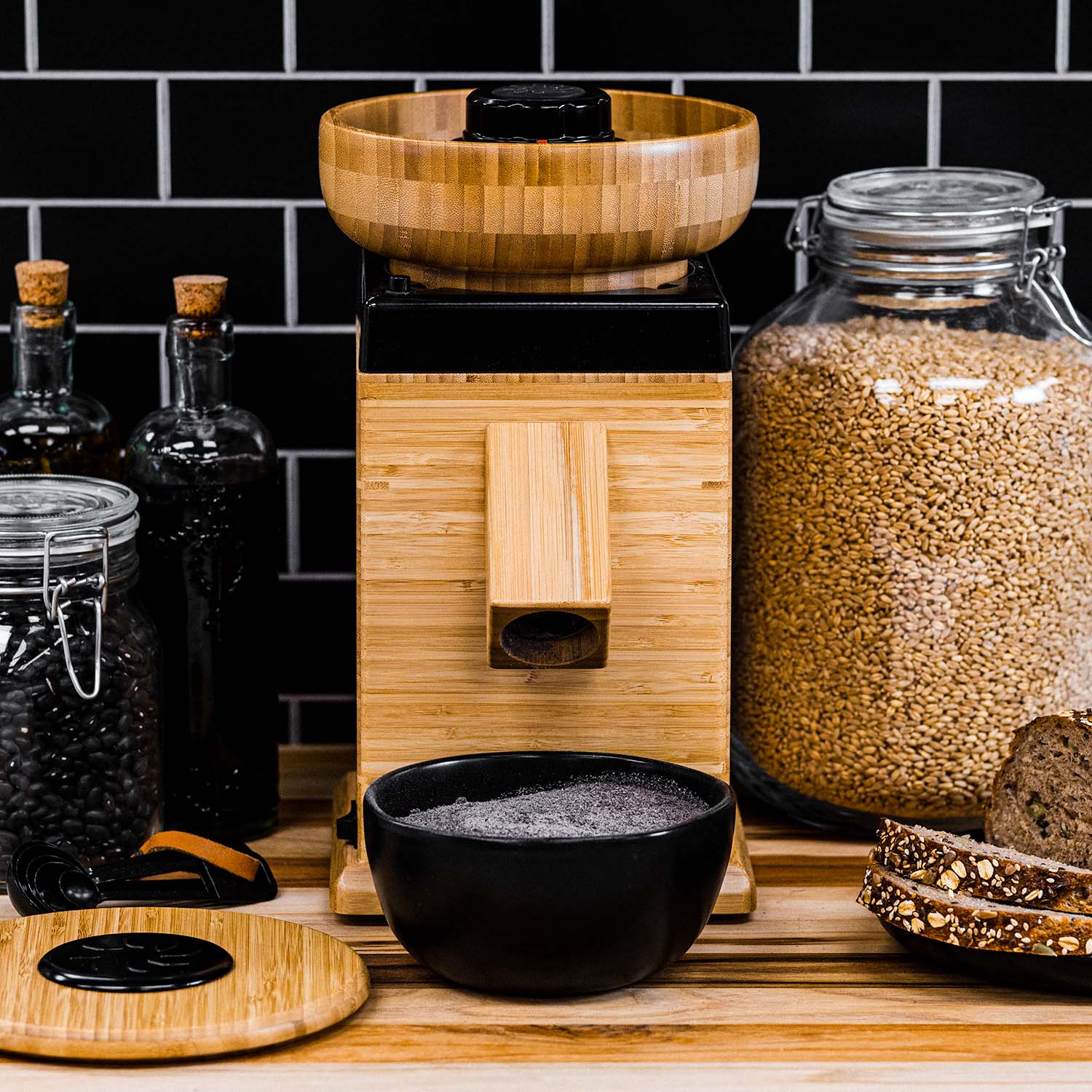

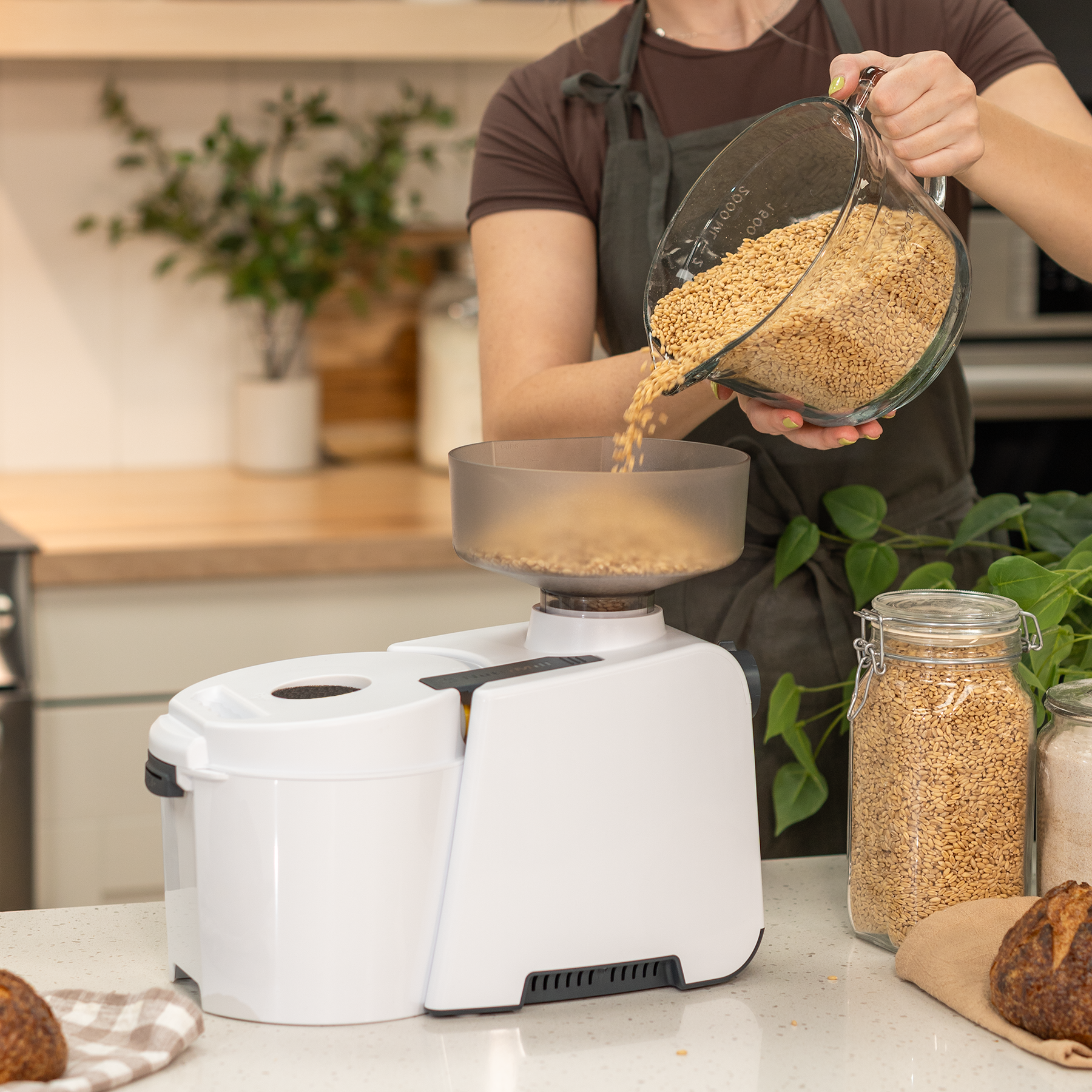




Flour drives flavor, which is why home-milling your own flour can give you optimal results from your baking. Refined flours leave out the bran and germ, where much of the grain’s fiber and nutrients live. Home-milling allows you to control the quality and ingredients in your flour, and it’s fresher than any flour from the store.
You can buy whole grains in bulk and keep them on hand for grinding. Just be sure to use your home-milled flour quickly or keep it cold so the natural oils in the grain don’t turn rancid. This can be easily avoided by storing your flour in an airtight container in the fridge.
Here’s a list of the grains you can grind at home as well as their uses and benefits:
Amaranth
- Often used in quick breads, muffins and pancakes
- Naturally gluten-free grain (to keep flour gluten-free, mill it in a mill that has never processed wheat, rye, or barley)
- May need to be used in addition to wheat flour when making leavened breads
Barley
- Slightly sweet, nutty flavor
- Contains vitamin B, iron, magnesium, manganese, phosphorus and zinc
- Contains gluten (less than wheat, so mix with wheat flour to help rising)
Buckwheat
- Slightly sour, nutty flavor
- Naturally gluten-free grain (see note below)
- Used in breads, pancakes, crepes, and even noodles such as soba
Corn
- Often used to make cornbread, fry breads, muffins and puddings
- Cornmeal can range from fine to coarse
- Contains vitamin B, magnesium and phosphorous
- Naturally gluten-free grain (see note below)
Kamut / Khorasan Wheat
- Can be substituted for other flours in breads, cookies, muffins, scones and waffles
- The berries have a buttery, nutty flavor
- A good source of protein and minerals like selenium and zinc
Millet
- Naturally gluten-free grain (see note below)
- Light, mild flavor
- Can be combined with other flours in quick breads, cookies, etc.
Quinoa
- Commonly cooked in liquid, but raw form can also be ground into flour
- Naturally gluten-free grain (see note below)
- Works great in biscuits, breads and tortillas
- Substitute half quinoa flour in recipes that call for all-purpose flour
- Can also replace wheat flour entirely in some cake and cookie recipes
Rye
- Hearty, earthy flavor.
- Contains gluten, though less than wheat.
- High in fiber.
- Commonly used in breads.
Spelt
- Spelt flour can be used in most baked goods to replace refined flour
- Sweet, nutty flavor
Wheat
- Substitute whole wheat flour for up to half the all-purpose flour in a recipe.
- Excellent source of fiber.
- Contains B vitamins and iron.
A note on gluten-free baking: a grain mill that has milled wheat, rye, barley, spelt, or Kamut can carry traces of gluten into other grains. If you are baking for someone with celiac disease, use a mill dedicated to gluten-free grains and buy certified gluten-free grains.
This post is for general information only and is not medical or nutrition advice. Everyone is different, so talk with your doctor or a registered dietitian before changing your diet, especially if you have celiac disease, diabetes, food allergies, or another health condition.



Leave a comment
All comments are moderated before being published.
This site is protected by hCaptcha and the hCaptcha Privacy Policy and Terms of Service apply.