


What’s Really in Your Flour?
Flour is one of the most familiar ingredients in the kitchen. We use it to make homemade bread, sourdough, cookies, pizza, muffins, pasta, and recipes passed down through generations.
But how often do we stop to ask:
What is actually in the flour we buy?
A recent investigation by the Florida Attorney General into potassium bromate in certain commercial bakery flours has brought renewed attention to flour ingredients, food labeling, and transparency.
The investigation does not mean all flour contains potassium bromate, nor does it establish that any company has violated the law. However, it does give home bakers another good reason to read ingredient labels and understand how their flour is made.
At NutriMill, we believe better food choices begin with better information. Milling flour at home is not about fear. It is about freshness, simplicity, and having more control over the ingredients you use to feed your family.
Why Is Potassium Bromate in the News?
On July 13, 2026, the Florida Attorney General announced an investigation into potassium bromate in Florida’s food supply chain.
According to the announcement, the Attorney General issued a civil subpoena to General Mills as part of an investigation under the Florida Deceptive and Unfair Trade Practices Act. The inquiry concerns products containing potassium bromate that were sold in Florida.
This is an active investigation. A subpoena is a request for information and is not, by itself, proof of wrongdoing.
That distinction matters.
The bigger takeaway for home bakers is not that every bag of flour should be feared. It is that knowing what is in your food helps you make more informed choices.
What Is Potassium Bromate?
Potassium bromate is a flour treatment agent that may be used to strengthen dough and improve its performance during commercial baking.
Federal regulations currently include standards for bromated flour. Under those standards, potassium bromate may be added to certain flour in limited quantities when it improves the flour’s baking qualities.
The International Agency for Research on Cancer, part of the World Health Organization, has classified potassium bromate as “possibly carcinogenic to humans,” also known as Group 2B.
That classification identifies a potential hazard. It does not mean that eating a product containing the ingredient will cause cancer, and it does not measure the risk associated with a particular level of exposure.
Not all flour contains potassium bromate. Many flour companies sell unbromated products, and consumers can often determine whether additional ingredients are present by reading the ingredient statement on the package.
Is Potassium Bromate Legal in the United States?
Potassium bromate remains addressed within current federal food regulations for certain uses.
The federal standard for bromated flour permits potassium bromate in quantities not exceeding 50 parts per million in finished bromated flour. A separate standard permits up to 75 parts per million in bromated whole wheat flour.
Its regulatory status does not mean every flour manufacturer uses it. It also does not mean every bakery product contains it.
When shopping for flour, look for terms such as:
- Bromated flour
- Unbromated flour
- Enriched flour
- Bleached flour
- Unbleached flour
- Whole wheat flour
- Dough conditioners
- Flour treatment agents
The ingredient list, rather than the marketing language on the front of the package, provides the most useful information.
What Ingredients Are Commonly Found in Flour?
The answer depends on the type of flour.
A bag labeled simply “whole wheat flour” may contain only whole wheat. Other flours may be refined, enriched, bleached, malted, or treated to produce specific baking characteristics.
Common flour ingredients may include:
- Wheat flour
- Malted barley flour
- Niacin
- Reduced iron
- Thiamine mononitrate
- Riboflavin
- Folic acid
- Enzymes
- Dough conditioners
- Bleaching agents
- Flour treatment agents
These ingredients are not automatically harmful. Some are added to replace nutrients removed during refining, while others help commercial flour perform more consistently.
Still, many families prefer simpler ingredients and greater visibility into how their food is made.
That is where fresh milling offers a meaningful advantage.
What Is Fresh Milled Flour?
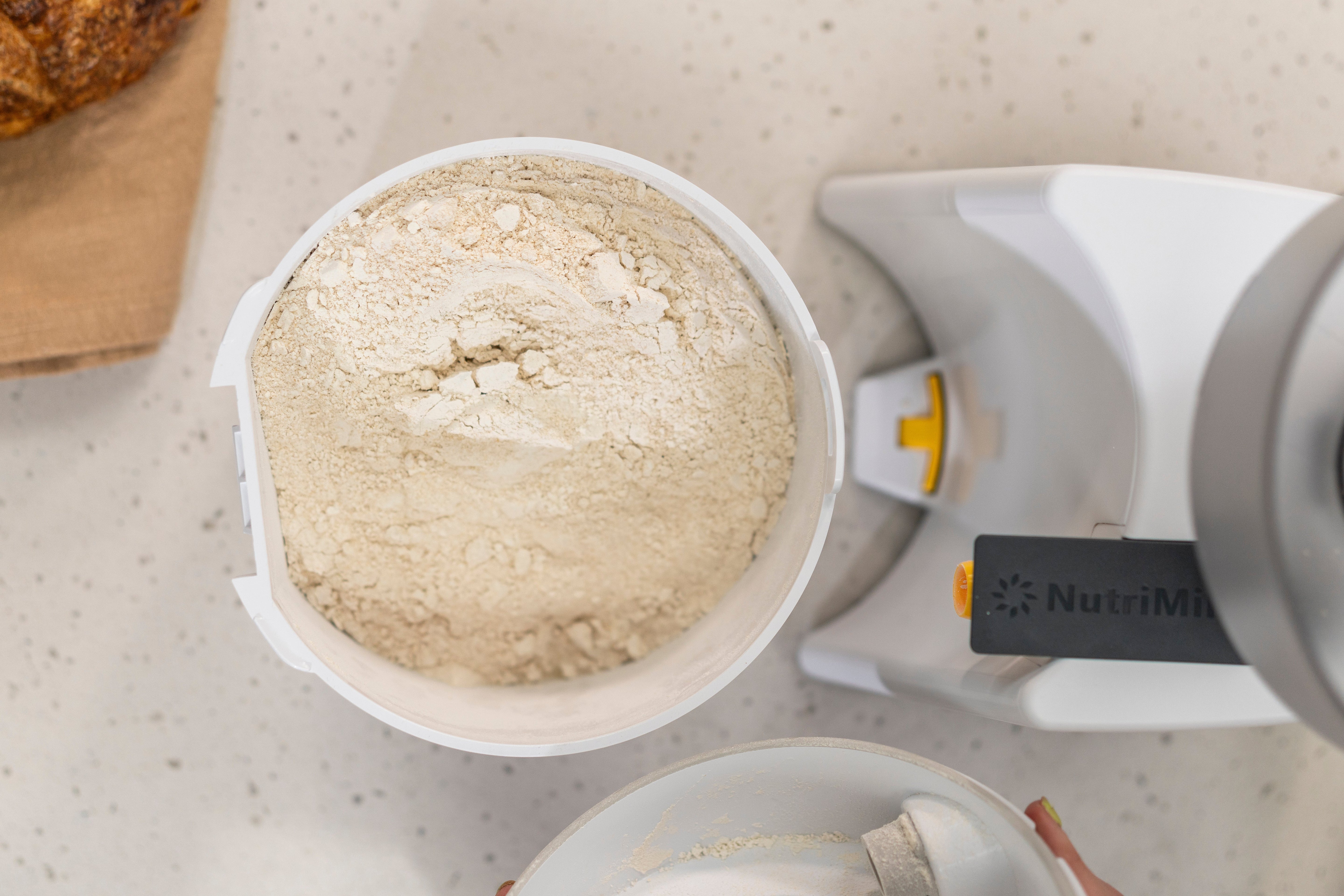
Fresh milled flour is made by grinding whole grain kernels into flour shortly before baking.
These intact kernels are commonly called wheat berries or grain berries. Depending on your recipe and grain mill, you can mill grains such as:
- Hard white wheat
- Hard red wheat
- Soft white wheat
- Spelt
- Rye
- Einkorn
- Kamut
- Oats
- Rice
- Buckwheat
Always check your mill’s instructions before milling a specific grain, especially oily, moist, or high-fat ingredients.
When you mill whole wheat berries, the resulting flour contains the grain’s three primary components:
Bran
The bran is the protective outer layer of the grain and contains fiber and naturally occurring nutrients.
Germ
The germ is the part of the kernel capable of growing into a new plant. It contains naturally occurring oils and nutrients.
Endosperm
The endosperm makes up the largest portion of the kernel and contains carbohydrates and protein.
Refined white flour typically removes much of the bran and germ. Whole-grain flour retains these parts of the kernel.
Fresh Milled Flour vs. Store-Bought Flour
Both fresh milled flour and store-bought flour can have a place in a home kitchen. The best choice depends on your recipe, priorities, time, and baking experience.
|
Fresh Milled Flour |
Store-Bought Flour |
|
Milled shortly before use |
Milled before packaging and distribution |
|
Made from grain you select |
Grain source varies by brand |
|
Can contain the bran, germ, and endosperm |
May be whole grain or refined |
|
Ingredients are controlled by the home baker |
Ingredients vary by product |
|
Flavor and texture vary by grain |
Designed for predictable performance |
|
Requires a grain mill |
Ready to use immediately |
|
May require recipe adjustments |
Often familiar and consistent |
Fresh flour is not automatically right for every recipe, and store-bought flour is not automatically poor quality.
The practical benefit of home milling is control.
You select the grain. You decide when to mill it. You know what went into the flour.
Does Milling Your Own Flour Remove Potassium Bromate?
Milling your own flour from plain, untreated whole grain means potassium bromate is not added during the home-milling process.
However, home milling should not be described as a treatment that removes contaminants or prevents disease.
The ingredients in your finished flour depend on the grain you purchase. Choose grain from a reputable supplier, review the product description, follow storage instructions, and contact the supplier when you have questions about processing or handling.
Fresh milling gives you greater control over ingredient selection. It does not guarantee that grain is free from every possible agricultural, environmental, or handling-related contaminant.
Transparency is the honest advantage. Magic force field? Sadly, the grain mill does not come with one.
Why Do Some Flours Contain Added Nutrients?
Many all-purpose and bread flours are refined during processing. Refining removes the bran and germ, leaving primarily the endosperm.
Some refined flours are then enriched with nutrients such as:
- Iron
- Niacin
- Thiamine
- Riboflavin
- Folic acid
Enrichment adds selected nutrients back into refined flour. However, enriched flour and whole-grain flour are not identical because whole grain retains the original bran, germ, and endosperm.
Neither term should be treated as a secret code for “good” or “bad.” They simply describe different products.
Understanding those differences can help you choose the flour that best fits your baking and nutrition goals.
Benefits of Milling Flour at Home
Families choose to mill flour at home for many reasons.
Greater Ingredient Control
When you begin with whole grain, you decide exactly which grain goes into your flour.
There is no guessing about whether you used hard white wheat, rye, spelt, or another grain because you selected it yourself.
Freshness
Home milling allows you to make flour shortly before baking rather than relying on flour that was milled before packaging, transportation, and storage.
More Grain Variety
A home grain mill makes it easier to bake with grains beyond conventional all-purpose flour.
Explore different flavors and baking characteristics by trying hard white wheat for sandwich bread, soft white wheat for pastries, or rye for hearty sourdough loaves.
Whole-Grain Baking
Milling intact grain allows you to use flour that retains the bran, germ, and endosperm.
Connection to the Baking Process
Fresh milling turns flour from an anonymous pantry ingredient into something you understand from the grain kernel to the finished loaf.
For many home bakers, that connection is one of the most rewarding parts.
Which NutriMill Grain Mill Is Right for You?
NutriMill offers several grain mills for making fresh flour at home. The best model depends on the texture you want, the amount of flour you typically make, and the type of milling experience you prefer.
NutriMill Classic Grain Mill
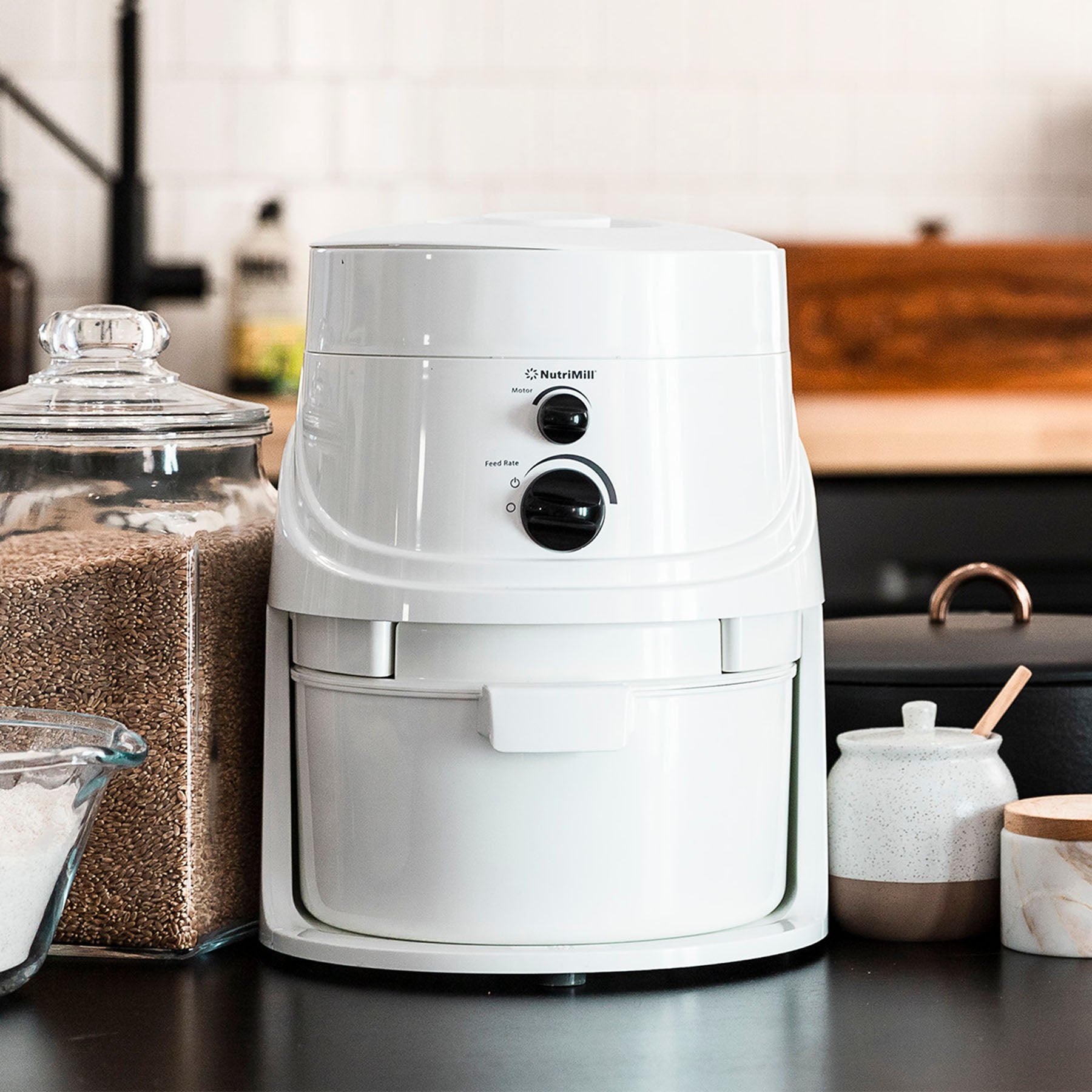
The NutriMill Classic Grain Mill is a high-speed impact mill designed for families who want to mill larger quantities of flour efficiently.
Its flour bowl and grain hopper make it a strong option for frequent bread bakers, batch baking, and households that want to prepare several cups of fresh flour at once.
NutriMill Impact Grain Mill
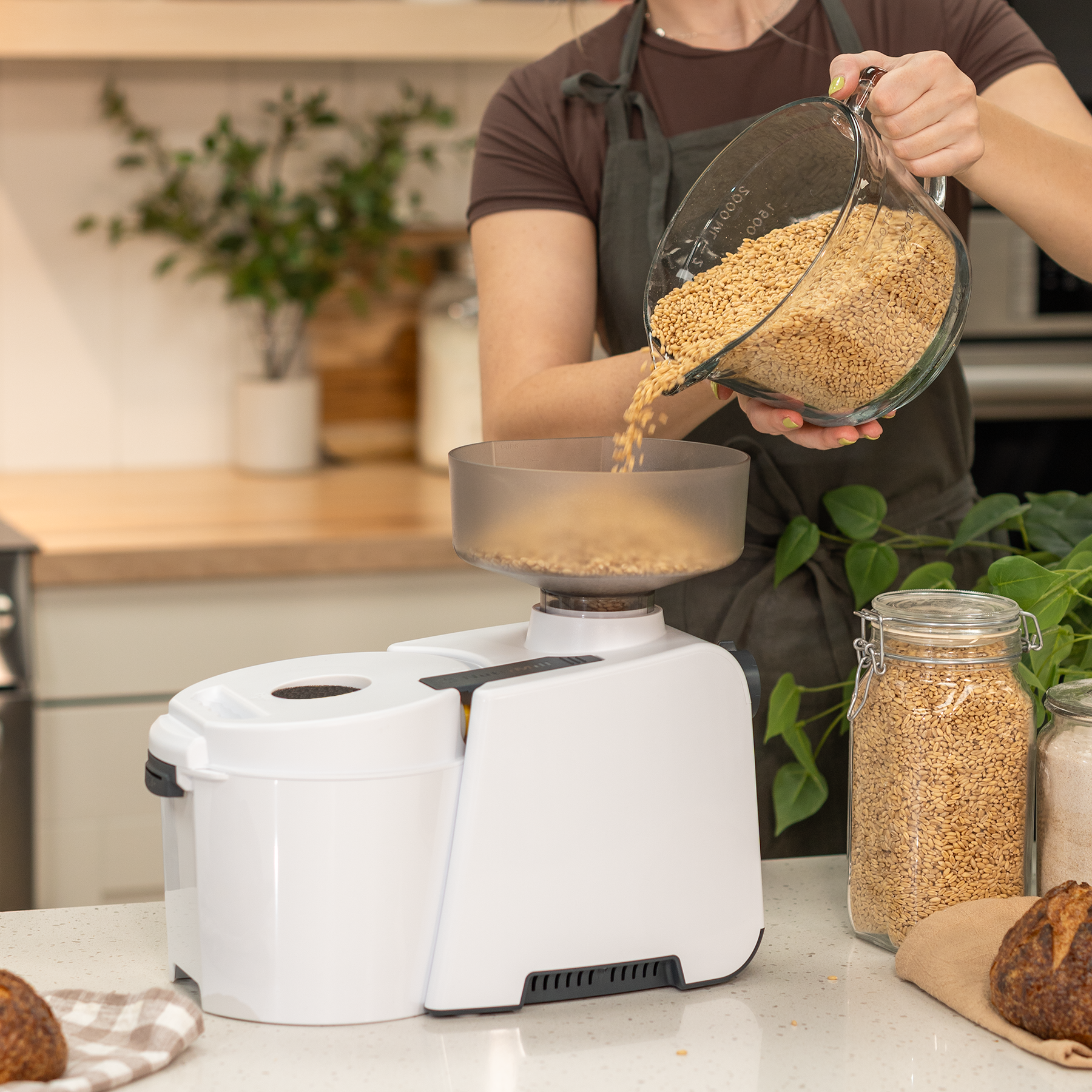
The NutriMill Impact Grain Mill provides a compact option for home bakers who want consistent fresh flour without giving up a large amount of counter or storage space.
It is a practical entry point for people beginning their fresh-milling journey.
NutriMill Harvest Grain Mill
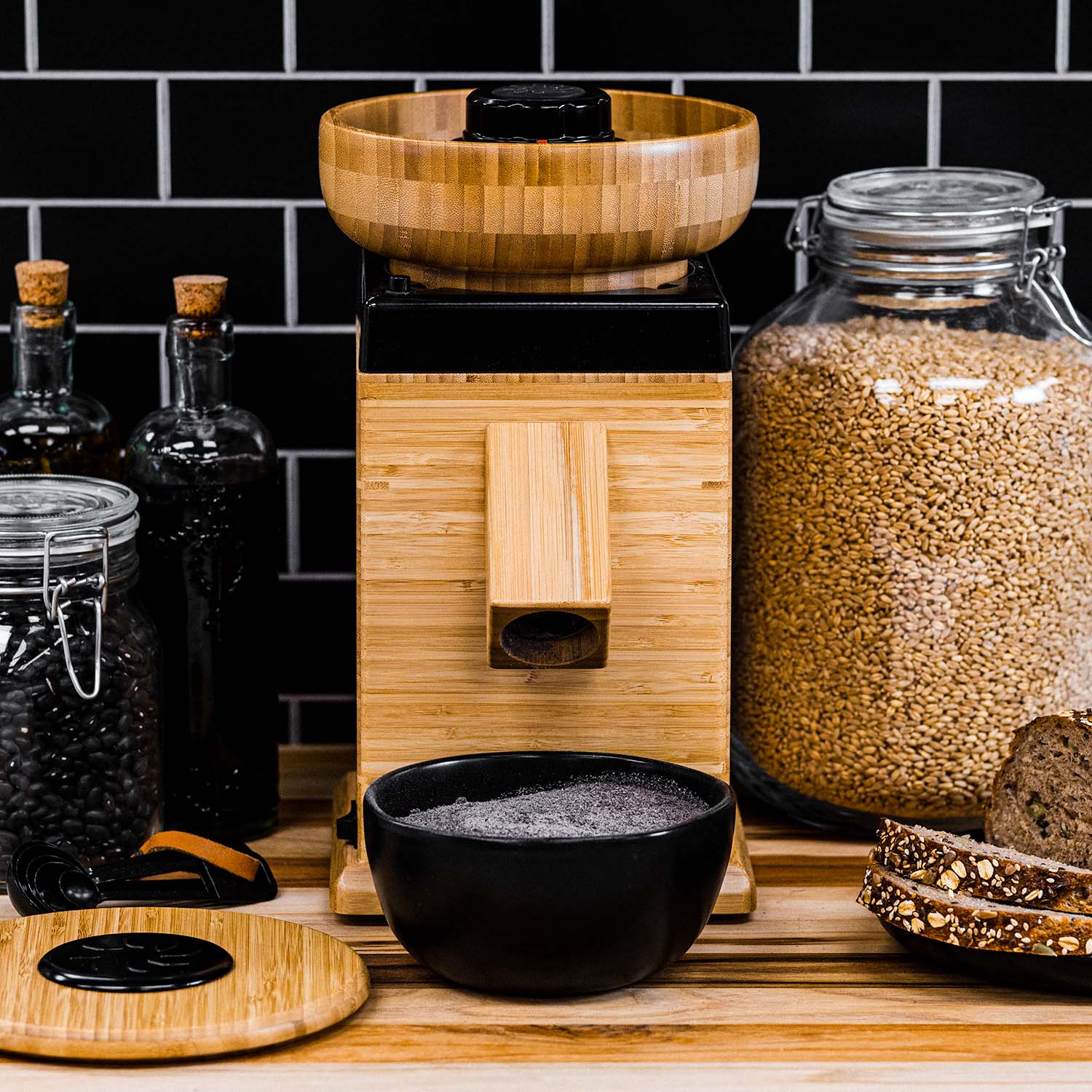
The NutriMill Harvest Grain Mill uses durable milling stones and offers a traditional stone-milling experience in a countertop-friendly design.
It is a good choice for bakers who value texture control, beautiful kitchen design, and the experience of milling directly into a bowl.
You can also read our comparison of the NutriMill Harvest and NutriMill Classic Grain Mills to explore the differences in greater detail.
How to Start Milling Flour at Home
Getting started is simpler than many people expect.
1. Choose a Grain Mill
Consider how often you bake, how much flour you need, and whether you prefer impact or stone milling.
Browse all NutriMill grain mills to compare your options.
2. Select Your Grain
For everyday yeast bread, many new home millers begin with hard white wheat or hard red wheat.
For cookies, cakes, muffins, and pastries, soft white wheat is often a useful option.
Explore NutriMill’s available wheat berries and whole grains to find a grain that fits your recipe.
3. Mill Only What You Need
Measure the grain required for your recipe and mill it shortly before baking.
Fresh flour behaves differently from conventional all-purpose flour, so begin with recipes developed for fresh milled flour whenever possible.
4. Expect a Learning Curve
Fresh milled flour absorbs liquid differently, and whole-grain dough may need additional hydration or resting time.
Do not panic if your first loaf has personality. Bread is deliciously dramatic.
5. Store Grain Properly
Keep whole grains sealed in a cool, dry location and follow the supplier’s storage recommendations.
For more guidance, read How to Store Wheat Berries and Fresh-Milled Flour.
How to Read a Flour Ingredient Label
You do not need to mill every cup of flour at home to make thoughtful choices.
When purchasing flour, follow these steps:
- Read the full ingredient list.
- Look for “bromated” or “unbromated” on the packaging.
- Determine whether the flour is whole grain, refined, enriched, bleached, or unbleached.
- Check for added conditioners or treatment agents.
- Compare products rather than relying only on front-label claims.
- Contact the manufacturer when an ingredient or process is unclear.
A short ingredient list is not always proof that a product is healthier, but a clear ingredient list makes it easier to understand what you are buying.
Should You Stop Using Store-Bought Flour?
Not necessarily.
Many high-quality store-bought flours are available, including whole-grain, organic, unbleached, and unbromated options.
Conventional flour may also be useful when you need:
- Predictable baking performance
- A very light texture
- Convenience
- A specific protein content
- Consistent results in a tested recipe
The goal is not to turn the baking aisle into a villain.
The goal is to understand your options.
You can use store-bought flour, fresh milled flour, or a combination of both. Many bakers begin by replacing a portion of the conventional flour in familiar recipes and gradually increasing the amount of fresh flour as they gain confidence.
Know Your Grain. Know Your Flour.
The recent conversation surrounding potassium bromate highlights something home bakers have always understood:
Ingredients matter.
Milling flour at home gives you a direct connection to one of the most important ingredients in your kitchen. You select the whole grain, mill the amount you need, and turn it into bread, pancakes, cookies, pizza, and meals made for the people you love.
That is not about fear.
It is about knowledge, freshness, and the confidence that comes from understanding your food.
Ready to begin?
Explore NutriMill grain mills and discover how simple it can be to make fresh flour at home.
Frequently Asked Questions
Does all flour contain potassium bromate?
No. Not all flour contains potassium bromate. Ingredients and processing methods differ among manufacturers and products. Check the ingredient statement and look for flour specifically labeled unbromated when that is important to you.
Is potassium bromate banned in the United States?
Federal regulations continue to include standards governing bromated flour and bromated whole wheat flour. State requirements and company policies may differ.
Can I make flour at home?
Yes. A home grain mill can grind appropriate whole grains into flour for bread, cookies, muffins, sourdough, pizza, and other recipes.
What is the best wheat for fresh milled bread?
Hard white wheat and hard red wheat are popular choices for yeast bread because they generally contain enough protein for good dough structure. Results vary by grain variety and recipe.
Is fresh milled flour the same as whole wheat flour?
Fresh milled wheat flour is whole wheat flour when the complete wheat kernel is milled and retained. However, packaged whole wheat flour may have been milled well before it reaches your kitchen.
Does fresh milled flour bake differently?
Yes. Fresh whole-grain flour may absorb more liquid and can produce a different texture than refined all-purpose flour. Recipes may require changes to hydration, mixing, kneading, or resting time.
Sources and Further Reading
- Florida Attorney General: Investigation into Potassium Bromate in Florida’s Food Supply Chain
- Fox 8: Florida Attorney General Investigates Flour Ingredient Possibly Linked to Cancer
- Electronic Code of Federal Regulations: Bromated Flour
- Electronic Code of Federal Regulations: Bromated Whole Wheat Flour
- FDA Substances Added to Food Inventory: Potassium Bromate
- IARC Monograph: Potassium Bromate Classification
This article is provided for general educational purposes and is not medical, nutritional, or legal advice. Regulations and scientific evaluations may change over time. Consumers should review current ingredient labels and consult qualified professionals regarding individual health concerns.

Leave a comment
All comments are moderated before being published.
This site is protected by hCaptcha and the hCaptcha Privacy Policy and Terms of Service apply.