

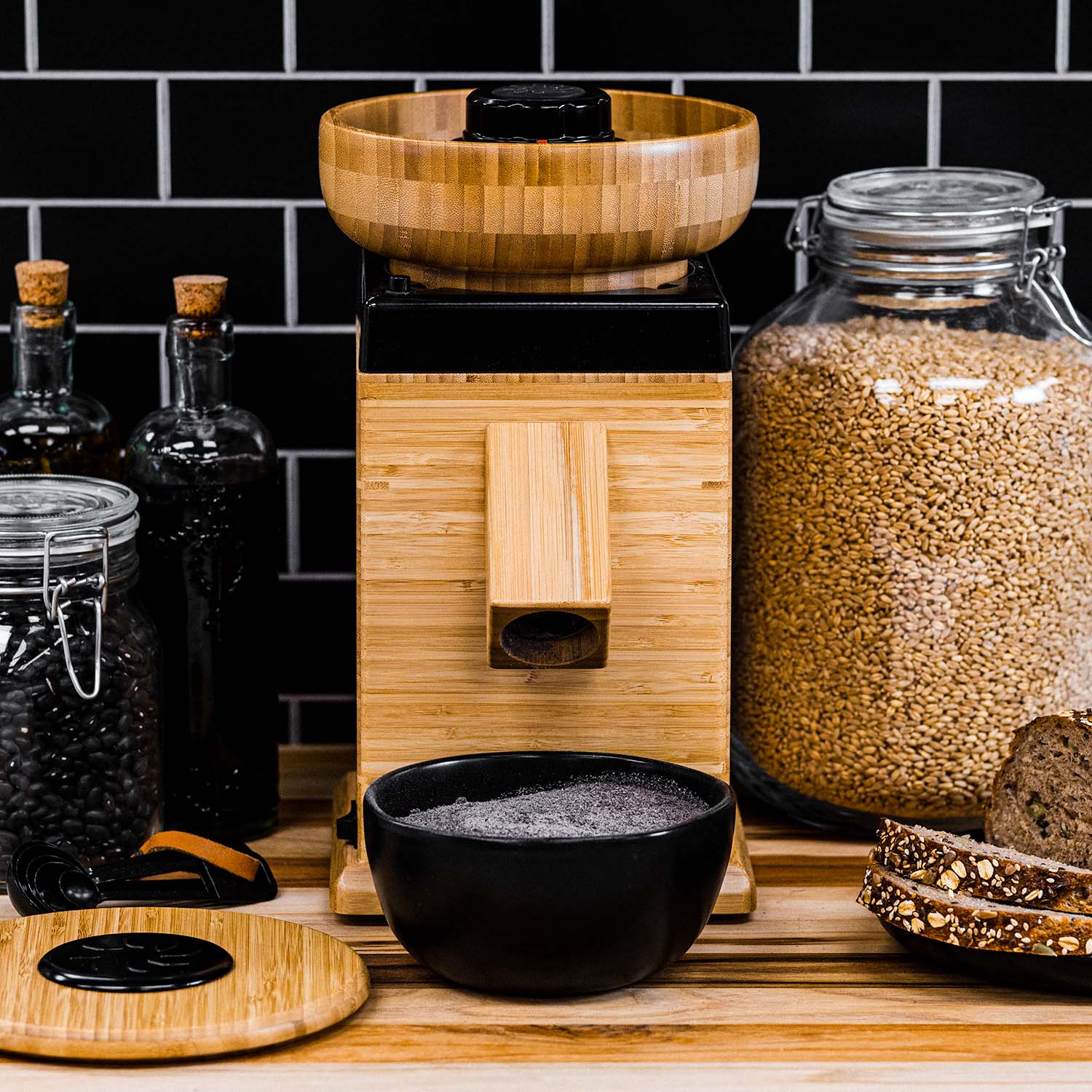
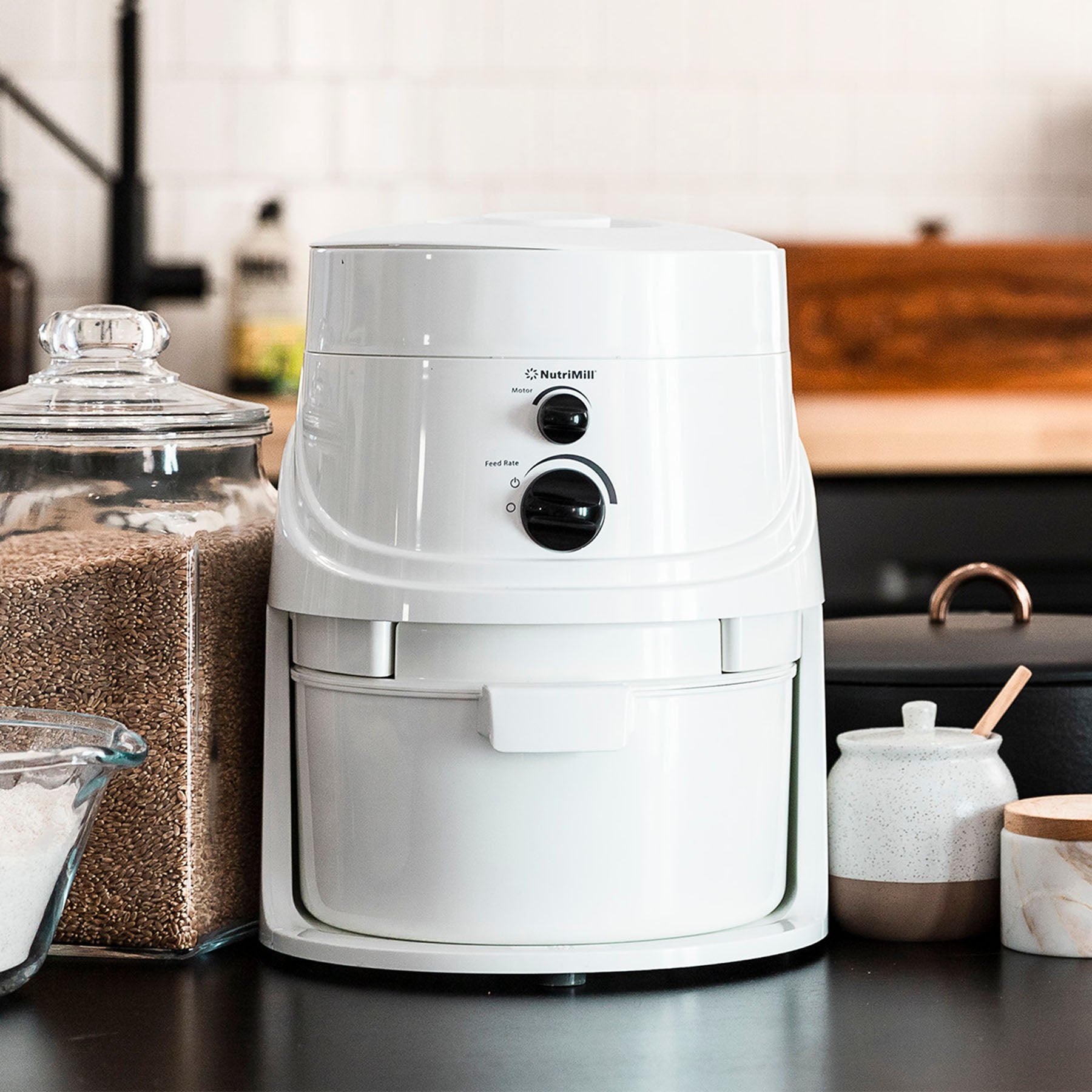
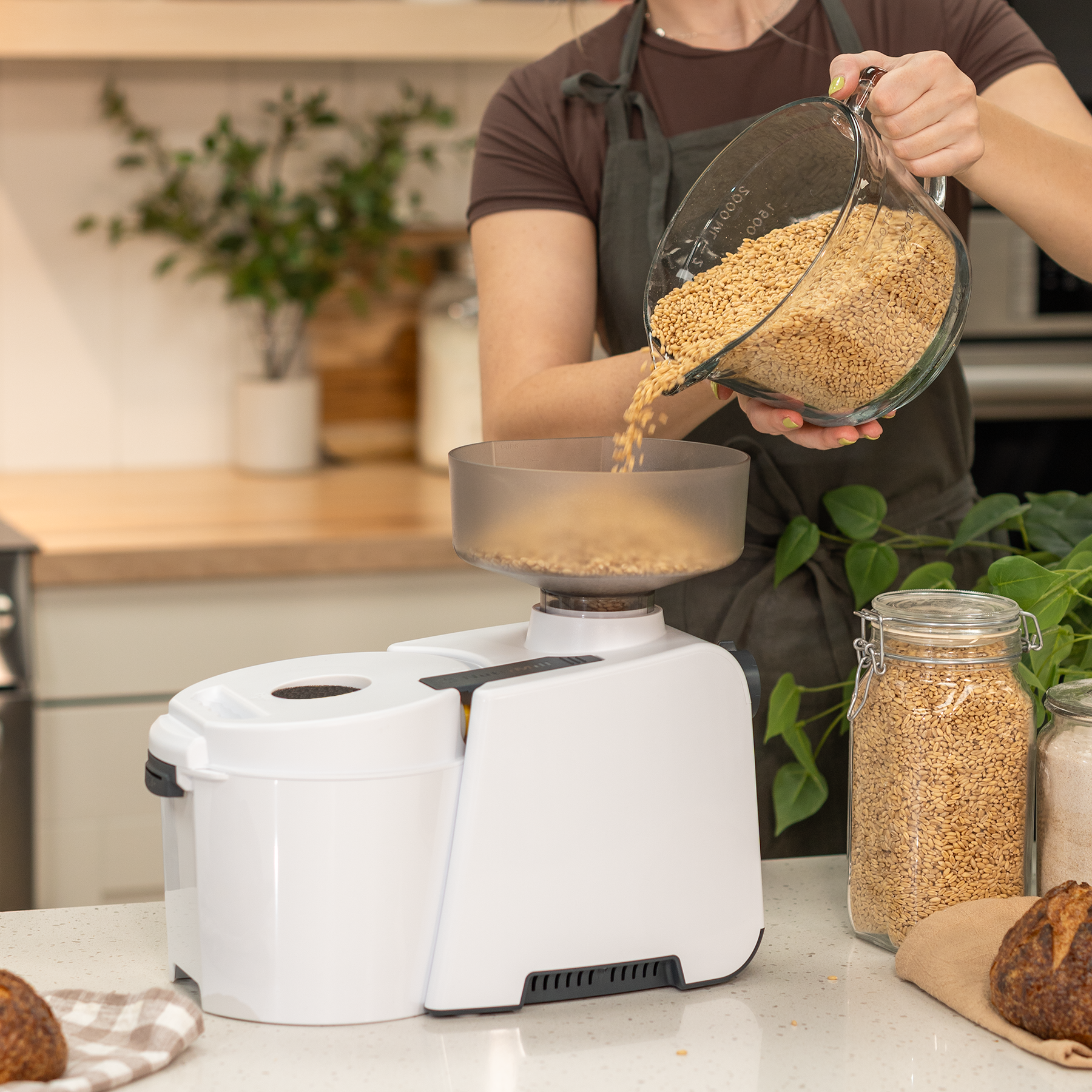
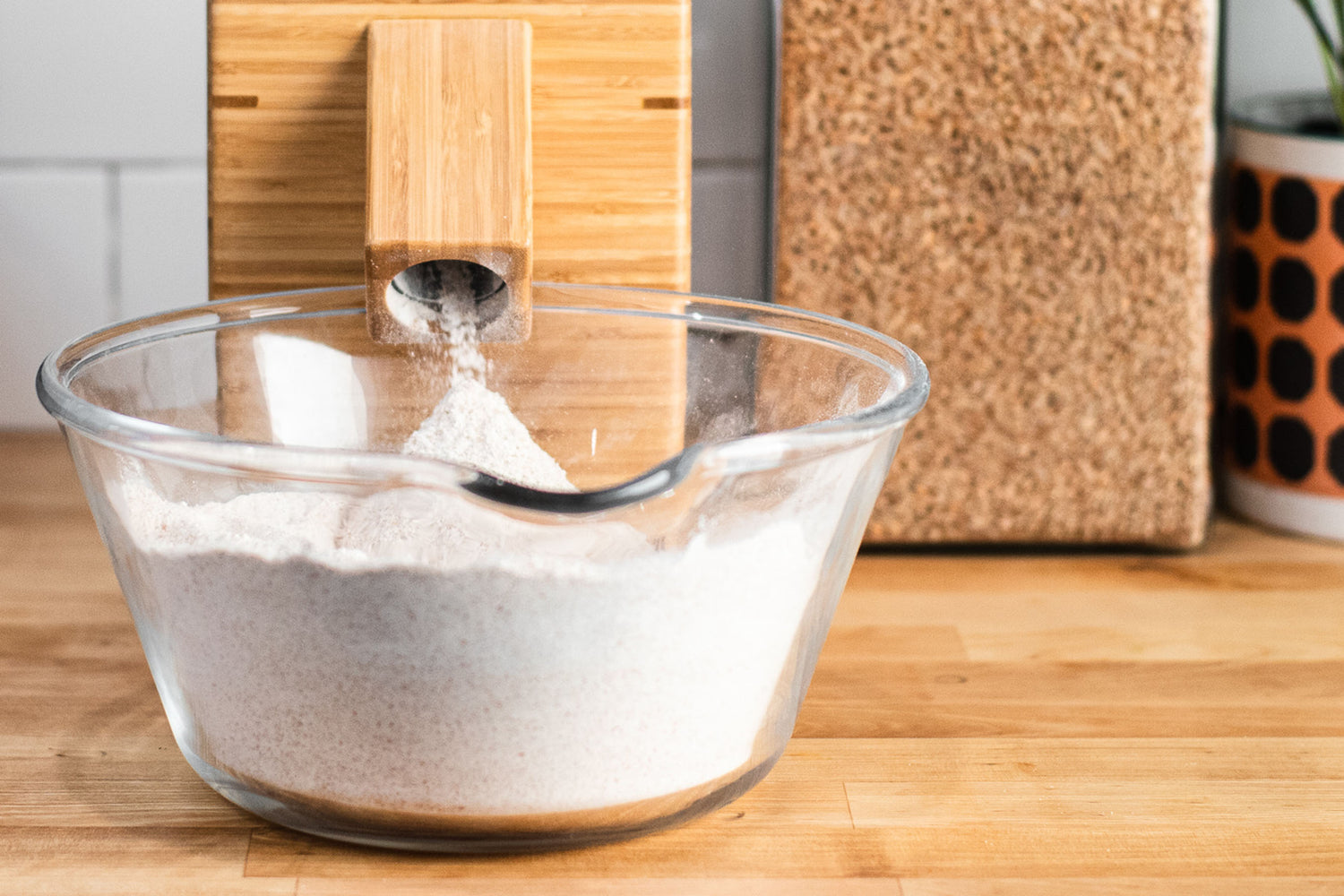
Store-bought flour labels can be confusing — "wheat flour" isn't the same as whole wheat flour. However, freshly milled flour is 100% whole grain and a great way to bring whole grains into a well-rounded diet.
Health and Nutrition
Whole grains are nutrient-dense. They're a good source of fiber, protein, minerals, and B vitamins. Diets rich in whole grain foods and other plant foods and low in total fat, saturated fat, and cholesterol may reduce the risk of heart disease and some cancers.
Refined flour has the bran and germ removed. Whole-grain flour you mill yourself keeps all of it.
Taste
Put simply, fresh foods taste better. You will notice a difference in taste between foods made from freshly ground flour and its store-bought counterpart. One specific way fresh, whole grain flour tastes better is because it still contains the germ of the grain. The majority of the oil in a grain is located in the germ, which adds a sweeter flavor to your baked goods.
Variety
There are hundreds of grains available to consumers, each with their own variety of nutrients and benefits. You can be confident you are getting high-quality flour from even the toughest of grains.
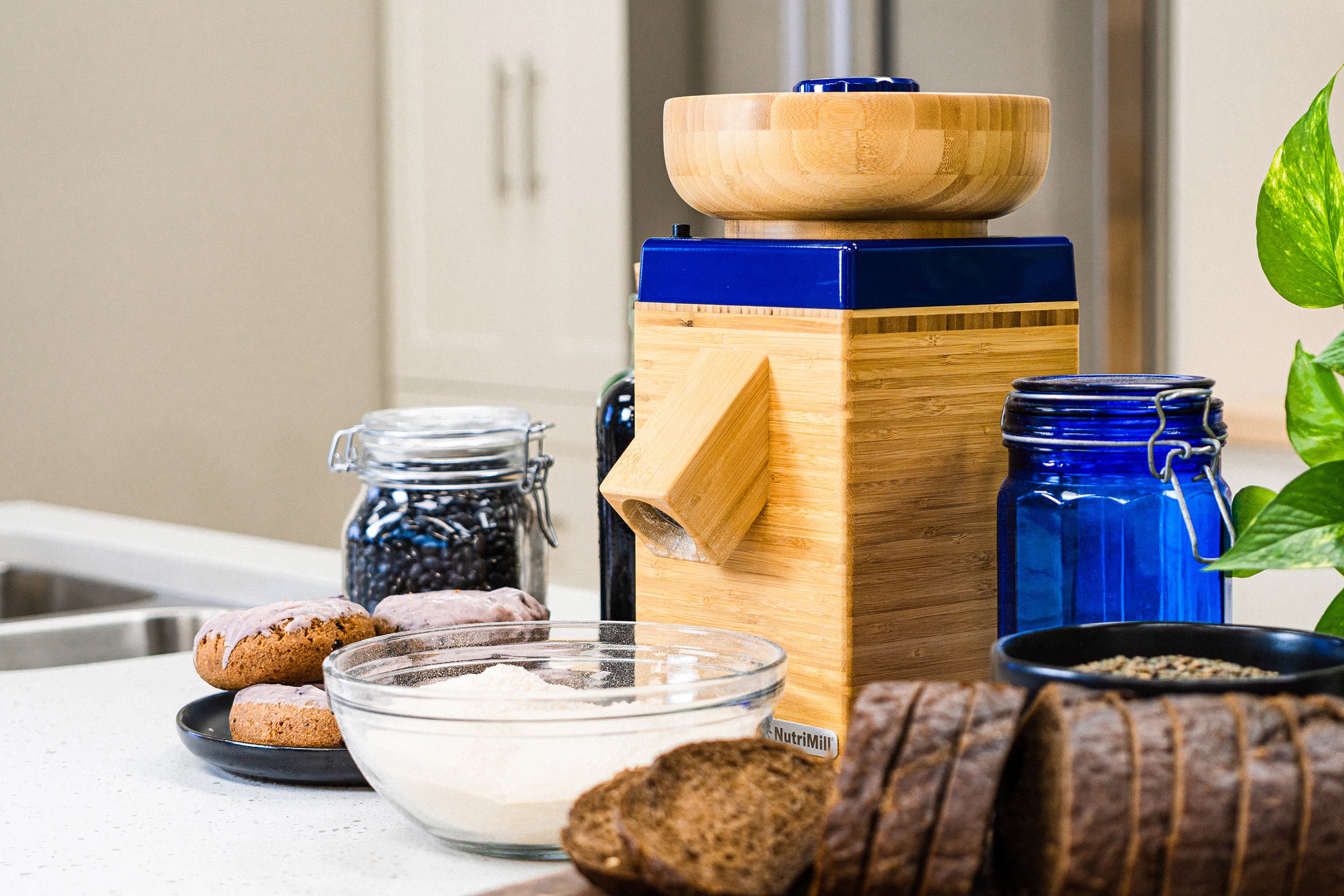
NutriMill offers a variety of mills for different milling tasks. Check your mill's manual before milling legumes or oily grains, since not every mill handles them. Many grains and legumes are naturally gluten free — if you're baking for someone with celiac disease, use a dedicated mill that's never touched wheat. There are a variety of other uses besides baked goods, such as grinding beans for refried beans or cracking peas for split pea soup.
A note on gluten-free baking: a grain mill that has milled wheat, rye, barley, spelt, or Kamut can carry traces of gluten into other grains. If you are baking for someone with celiac disease, use a mill dedicated to gluten-free grains and buy certified gluten-free grains.
This post is for general information only and is not medical or nutrition advice. Everyone is different, so talk with your doctor or a registered dietitian before changing your diet, especially if you have celiac disease, diabetes, food allergies, or another health condition.

Leave a comment
All comments are moderated before being published.
This site is protected by hCaptcha and the hCaptcha Privacy Policy and Terms of Service apply.