

There’s a small but painful moment every new home miller eventually has: you open the jar of flour you milled three weeks ago, and something is off. Not dramatically rancid — just flat, a little sour, like a paper bag that sat in the garage too long. You bake with it anyway, and the bread is fine, but it’s not the bread you tasted that first weekend.
The problem isn’t the grain. It’s the storage.
Whole wheat berries and fresh-milled flour sit on opposite ends of the shelf-life spectrum. Whole berries are one of the most stable foods on the planet — capable of lasting decades when stored correctly. Once you crack them open in your mill, the clock starts ticking, and it ticks faster than most beginners expect.
This guide walks through exactly how to store both, what containers to use, and what to avoid — so the flour you mill tomorrow morning tastes the way it did the first time.
Why Storage Matters More with Whole Grains
Conventional white flour is built for shelf life. The industrial milling process strips away the bran and germ, leaving behind a starchy endosperm that can sit on a grocery shelf for a year without losing much flavor or function.
Whole-grain and fresh-milled flour are the opposite. They contain the full kernel — bran, germ, and endosperm — which means they also contain all the natural oils, enzymes, and nutrients that make them valuable in the first place. Those same oils are what spoil first.
Once a grain is cracked open during milling, oxygen reaches the lipids in the germ and bran, and the oils and some vitamins in the germ start to oxidize — which is why fresh-milled flour tastes best used within a few days. Within weeks, that oxidation produces the stale, “old crayon” smell that tells you flour has turned. For a deeper dive on this nutritional difference, our comparison of freshly home-milled vs. store-bought flour covers exactly what gets lost and why.
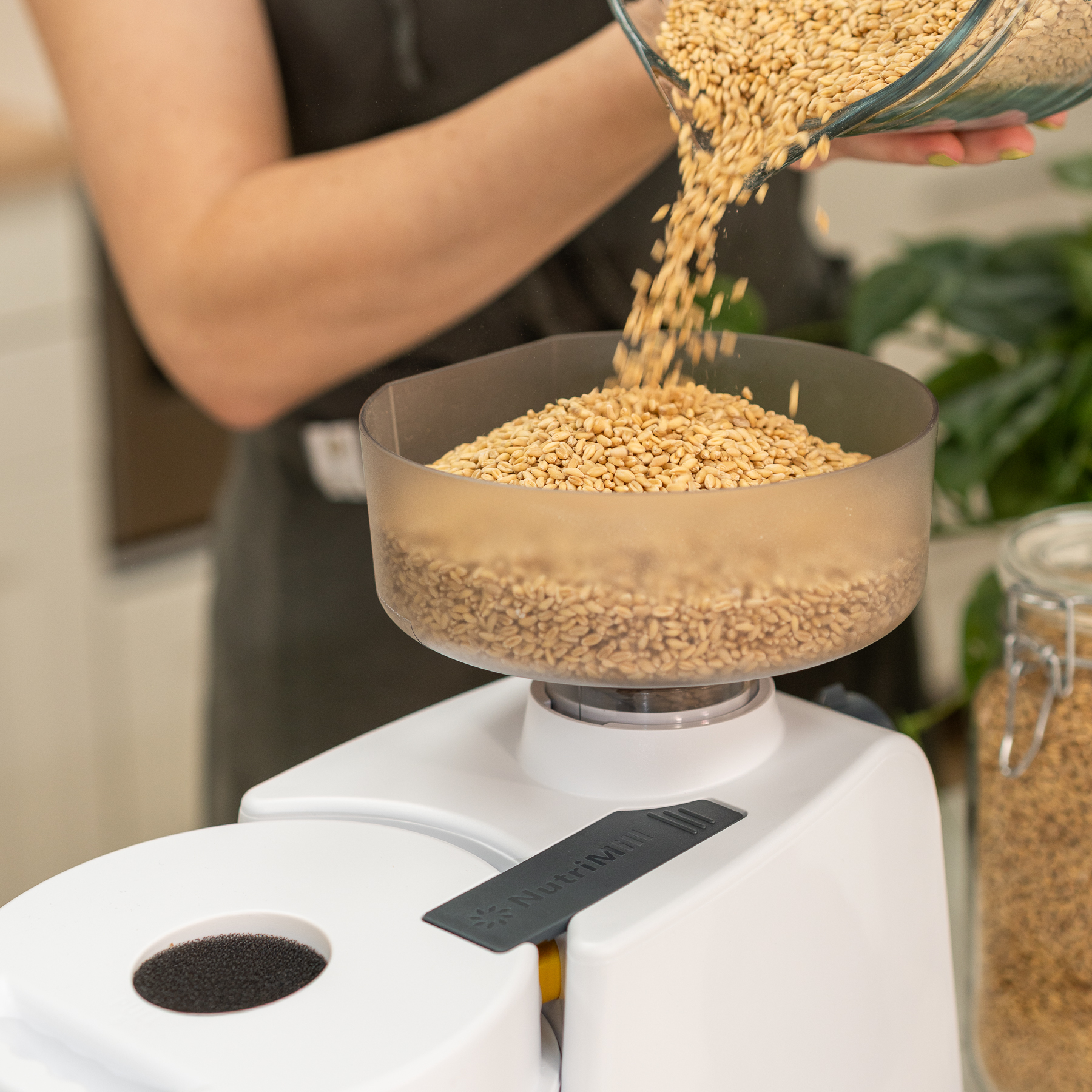
Whole berries don’t have this problem — their hard outer husk acts as a built-in seal. That’s why a smart home-milling pantry runs on a two-tier system: long-term storage for whole grains, short-term storage for the flour you’ve already milled.
Tier 1: How to Store Whole Wheat Berries
Shelf life at a glance
Stored properly, whole intact grains like wheat berries keep for:
- 6 to 12 months in an airtight container in a cool, dry pantry
- Up to 1 year in the freezer (though most home millers don’t need to freeze whole berries)
- 20 to 30 years in oxygen-free, food-grade buckets for long-term emergency storage
The dramatic difference comes from two variables: oxygen exposure and temperature. Eliminate both, and your grains stay viable far longer than most people imagine.
The pantry baseline
For grain you’ll use within 6 to 12 months, a cool, dark, dry pantry is plenty. The basics:
- Airtight containers — glass jars, food-grade plastic bins, or sealed buckets
- Temperatures below 70°F when possible
- Out of direct sunlight
- Away from strong-smelling foods (grain absorbs odors easily)
Many home millers run a working pantry of 5- to 10-pound jars in the kitchen and a deeper backup of full 25-pound buckets in a basement, closet, or pantry shelf.
Long-term grain storage
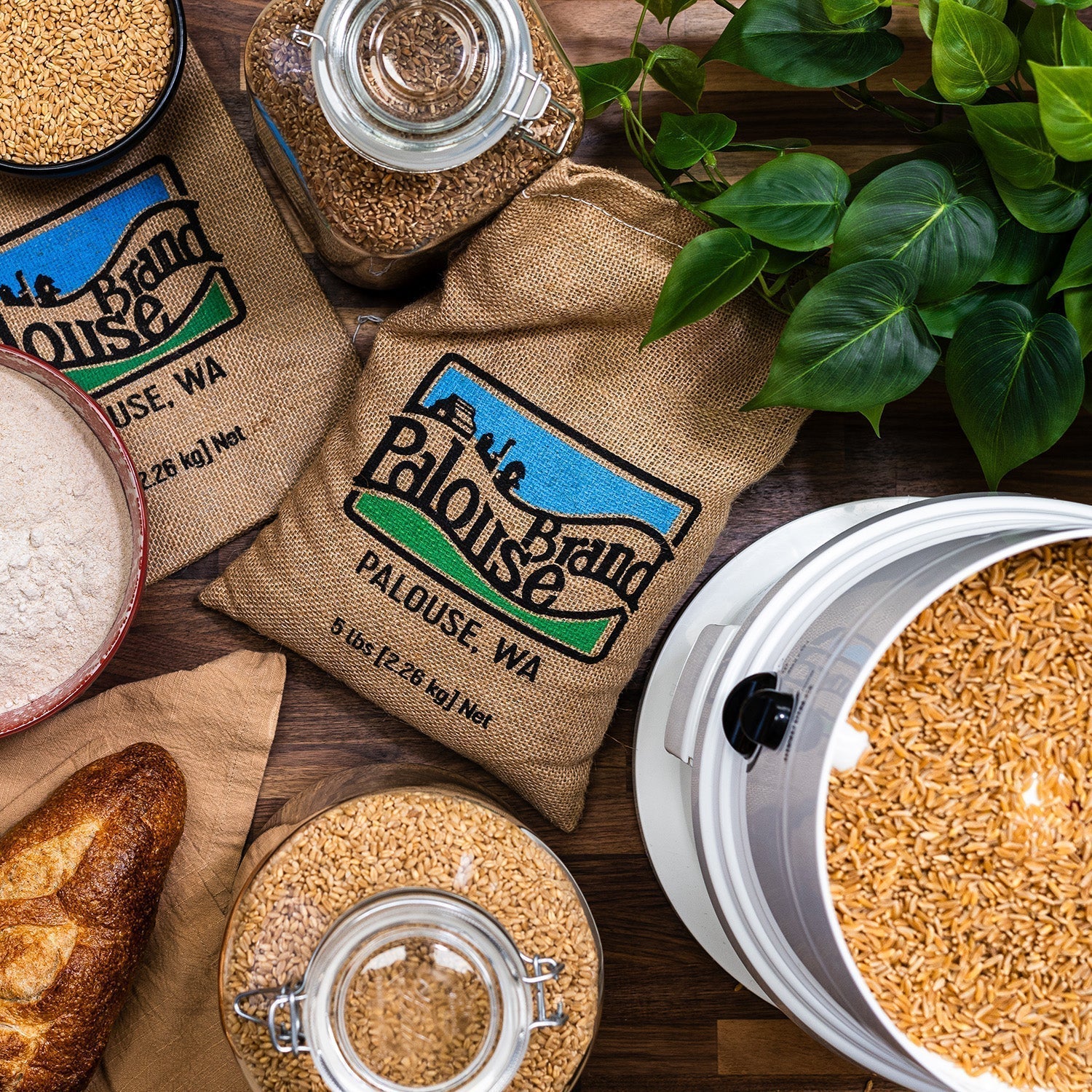
If you’re buying grain in bulk for true long-term storage, the goal is to eliminate oxygen completely. NutriMill’s 25-lb wheat berry buckets from Palouse Brand ship food-storage ready: gasketed lids that seal tight, grain Palouse Brand tests for glyphosate residue, and a format that stacks neatly in a pantry or basement.
For multi-decade storage, the gold standard is:
- A sealed Mylar bag inside a food-grade bucket
- One or more oxygen absorbers sized for the bucket volume
- A gamma-seal or gasketed lid
Done correctly, that combination can take wheat berries past 30 years — useful for preparedness, but overkill for most home bakers. If you’ll open the bucket within a year or two, the bucket alone is plenty.
Signs your grain has gone off
Whole berries are durable, but not invincible. Watch for:
- Off, sour, or musty smell
- Visible mold (rare, but possible if moisture got in)
- Weevils or other pantry pests (small beetles, webbing)
- A bitter taste after cooking or milling
If you’re unsure, mill a small batch and smell the flour. Fresh berries produce flour with a sweet, nutty aroma. Old berries produce flour that smells flat or vaguely chemical.
Tier 2: How to Store Fresh-Milled Flour
This is where most beginners get tripped up. Fresh-milled flour is not shelf-stable like commercial flour, and treating it that way is the fastest path to disappointing bread.
Shelf life at a glance
- 24 to 72 hours on the counter for peak flavor
- 1 to 2 weeks in an airtight container in the refrigerator
- 3 to 6 months in the freezer
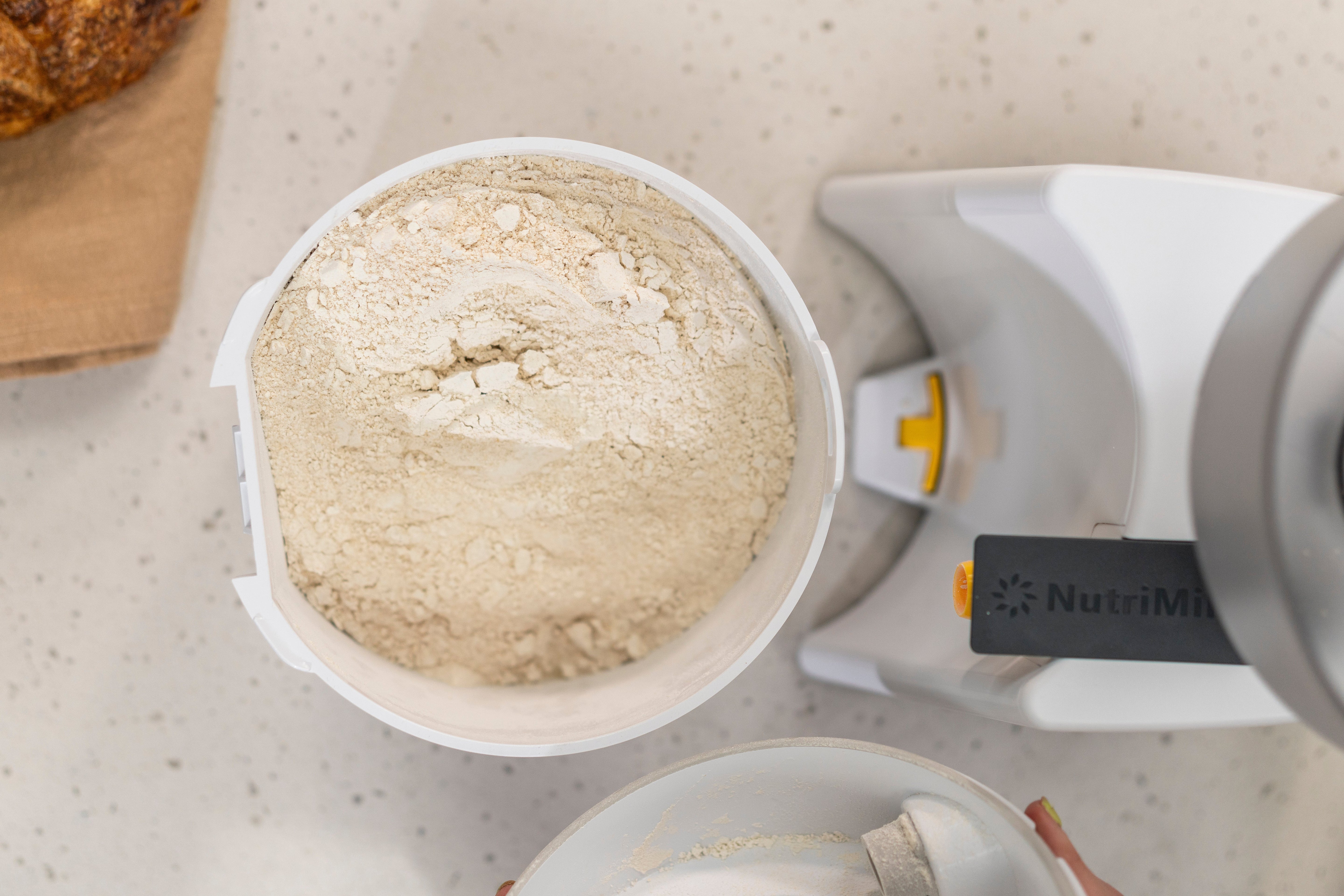
The honest answer: the best storage strategy for fresh-milled flour is to not store it at all. Mill what you need for the recipe in front of you, plus a little extra. Most home millers settle into a rhythm of milling once or twice a week, right before they bake.
When you do need to store it
Sometimes you’ll mill more than you need — it’s faster to grind six cups at once when you’re already set up. For that extra flour, follow this hierarchy:
- Use within 24 hours. Counter storage in an airtight container is fine for a day or two.
- Refrigerate for up to two weeks. Use a glass jar with a tight-fitting lid; condensation is the enemy.
- Freeze for anything longer. Portion the flour into freezer-safe bags or airtight containers, label with the date, and pull out only what you need.
Bring frozen flour to room temperature before mixing it into a dough — cold flour can stunt yeast activity and throw off hydration calculations.
Why refrigeration can backfire
Some sources will tell you to refrigerate fresh-milled flour by default. Be careful: refrigerators are humid environments, and every time you open the container, moisture can condense on the cold flour as it warms. Over time, that introduces clumping and, in worst cases, mold.
If you do refrigerate, use a truly airtight container — a Mason jar with a tight gasket, a glass container with a sealed lid, or a heavy-duty zip-top bag with the air pressed out.
Signs your flour has turned
Fresh flour should smell sweet and slightly grassy, like wheat in a field. Spoiled flour smells:
- Sour or fermented
- Musty or papery
- Like old crayons or wet cardboard
When in doubt, toss it and mill a fresh batch. Your bread will thank you.
The Home Miller’s Storage Setup
You don’t need a custom pantry build to do this well. A simple two-part system covers most home bakers:
For whole grains
- Daily-use stash: A clear glass or plastic canister on the counter holding 3 to 5 pounds of your most-used wheat. Visible, accessible, refilled from bulk.
- Bulk reserve: 25-pound buckets stored in a cool, dry spot. Open one at a time, decanting into the daily-use canister as needed.
For fresh-milled flour
- Counter container: A small airtight jar for the flour you’ll use within a day or two.
- Freezer overflow: Freezer-safe bags or airtight glass containers for anything beyond that. The goal is to keep the flour sealed off from oxygen and pull out only what you need.
Containers to skip
- Paper bags (let in air and moisture)
- Thin produce-bag plastic (not airtight)
- Decorative jars with loose lids (look great, fail at sealing)
- Anything not labeled food-grade plastic (some plastics off-gas into food over time)
Common Storage Mistakes — and How to Avoid Them
A few patterns trip up new home millers more than any others:
Mistake 1: Milling a week’s worth of flour at once. Tempting, but you’ll lose flavor in seven days that you won’t get back in five minutes of mill time. Mill smaller batches more often.
Mistake 2: Storing flour in a warm cabinet near the oven. Heat accelerates oxidation. Pick the coolest cabinet in your kitchen.
Mistake 3: Buying 200 pounds of grain before you know what your family will eat. Start with a single 25-pound bucket of hard white wheat or a small wheat variety bundle and learn your usage rate before scaling up. Our guide to the four main types of wheat can help you decide which to commit to.
Mistake 4: Skipping the date label. Mark when you milled it or sealed it. After your second or third batch, all the jars look the same.
Mistake 5: Storing grain in the garage in summer. Temperature swings and pest pressure are higher than most people realize. Choose interior storage if you can.
Frequently Asked Questions
How long does fresh-milled flour really last?
For peak flavor and nutrition, use within 24 to 72 hours of milling. Refrigerated in an airtight container, it holds well for one to two weeks. Frozen, it stays usable for three to six months — though flavor gradually fades over time.
Do wheat berries really last 30 years?
Yes, when stored in an oxygen-free environment — a Mylar bag with an oxygen absorber inside a sealed, food-grade bucket — in a cool, dry place. For everyday baking storage, you don’t need to go that far. A gasketed bucket alone is plenty for one to two years of regular use.
Should I refrigerate or freeze the flour I just milled?
If you’ll use it within two days, the counter is fine. For two weeks, refrigerate in an airtight container. For anything longer, freeze it — and let it come to room temperature before baking.
What’s the best container for whole wheat berries?
A food-grade bucket with a gasketed or gamma-seal lid is the gold standard for bulk. For daily use, a glass jar with a tight-sealing lid works perfectly. Avoid paper, thin plastic, or any container that isn’t truly airtight.
Can I store fresh-milled flour in Mylar bags?
Yes, but they’re best for storage you don’t plan to open often. Once a Mylar bag is opened, the oxygen absorber is spent and the bag itself doesn’t reseal well. Mylar shines for long-term, unopened storage — not the flour you’re baking with this week.
Does freezing damage the nutrition in fresh-milled flour?
No. Freezing slows the oxidation and enzyme activity that degrade flour at room temperature, so it helps preserve what you milled.
Start with the Right Grain — and the Right Storage
Home milling is a small commitment with outsized rewards: better flavor, whole-kernel flour, and a pantry that can ride out a bad week without a grocery run. Storage is the quiet part that determines whether all of that pays off.
If you’re just getting started, the simplest setup wins:
- A countertop grain mill that handles your everyday baking
- A bucket or two of whole grain berries you’ll use in the next 6 to 12 months
- A handful of airtight containers for the flour you actually mill
Mill small, store smart, and bake more often. That’s the whole system.
New to home milling? Start with our Beginner’s Guide to Home Grain Milling, then come back here when you’re ready to pick out your grain.
This post is for general information only and is not medical or nutrition advice. Everyone is different, so talk with your doctor or a registered dietitian before changing your diet, especially if you have celiac disease, diabetes, food allergies, or another health condition.

Dejar un comentario
Todos los comentarios se revisan antes de su publicación.
Este sitio está protegido por hCaptcha y se aplican la Política de privacidad de hCaptcha y los Términos del servicio.